Dragon Tiger: Trying the Game Before Playing for Real Money
Dragon Tiger is a live dealer card game, not a video slot. It is streamed in real time from a studio, which means there is no traditional free demo mode where you can play unlimited rounds without cost. The game's format involves real dealers, a physical table, and a fast-paced betting round that concludes with the dealing of two cards.
This page explains the practical ways to familiarize yourself with Dragon Tiger's mechanics and betting options before committing real funds. It covers observing live rounds, understanding the table layout and payouts, and the concept of practicing with the smallest available stake.
Why Dragon Tiger Has No Traditional Demo Mode
Dragon Tiger is a live table game produced by Evolution Gaming. It is broadcast from a studio with a real dealer and physical cards. This operational model differs fundamentally from RNG-based video slots. The studio, dealer, and equipment represent a real cost for the provider. Therefore, the game is only activated when real bets are placed by players. There is no version of the live stream where the dealer goes through the motions without real money wagered.
Some sources mention RNG-powered or First Person versions of Dragon Tiger. These are digital simulations that replicate the game's rules. However, they do not provide the live dealer experience, which is the core format for Dragon Tiger. The First Person version by Evolution Gaming is a separate product that offers a simulated table.
How to Watch Live Dragon Tiger Rounds
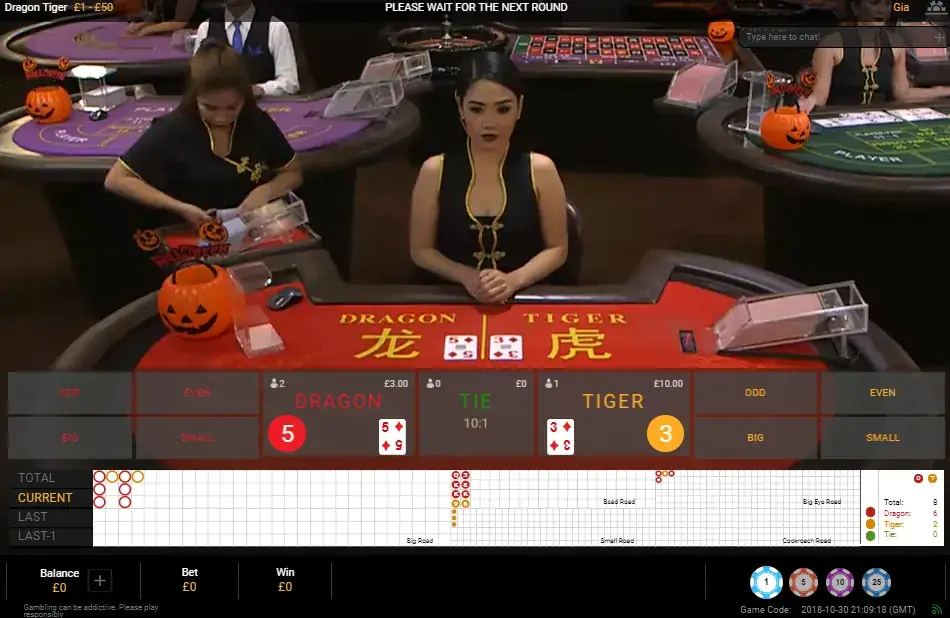
The most effective way to learn Dragon Tiger without betting is to watch a live game stream. Most online platforms that offer the game allow you to observe a table without registering an account or placing a bet. You can see the entire process, from the betting countdown to the card deal and payout.
While watching, note the timing. A standard round lasts approximately 15 to 25 seconds for betting, followed by the deal. Observe the dealer's actions, the table layout with its betting areas for Dragon, Tiger, Tie, and Suited Tie, and the display of results. Watching multiple rounds will help you understand the game's rhythm and the frequency of different results.
Practising with the Smallest Stake
Once you understand the basic flow, the next step is to practice with real money at the lowest possible stake. According to verified facts, the minimum bet for Dragon Tiger can be as low as $0.50. This allows for practical experience with minimal financial risk.
Start by placing only the main Dragon or Tiger bets, which pay 1:1. These have the highest Return to Player (RTP) at 96.27%. Avoid side bets like Tie or Suited Tie initially, as they have lower RTPs despite their higher payout potential. The goal of this practice is not to win money but to become comfortable with the betting interface, the speed of the game, and the feeling of real stakes. Set a strict budget for this learning session, such as 20 times the minimum bet, and stop once it is spent.
Understanding Bet Types and Payouts
Before playing, you must know exactly what you are betting on. Dragon Tiger offers simple main bets and higher-variance side bets. The following table outlines the standard betting options and their payouts, based on verified game facts.
| Bet Type | Description | Payout |
|---|---|---|
| Dragon | Bet that the Dragon position receives the higher card. | 1:1 |
| Tiger | Bet that the Tiger position receives the higher card. | 1:1 |
| Tie | Bet that both cards will be of equal rank. | 11:1 |
| Suited Tie | Bet that both cards will be of equal rank and the same suit. | 50:1 |
The maximum win multiplier in the standard game is 50:1, which corresponds to the Suited Tie bet. The RTP of 96.27% applies specifically to the Dragon and Tiger bets. The Tie and Suited Tie bets have a lower theoretical return, meaning the house edge is higher on these options.
The Role of RTP and Volatility in Strategic Play
While the basic premise of Dragon Tiger is simple, a deeper understanding of its Return to Player (RTP) and volatility is crucial for informed play. The game, as provided by Evolution Gaming, has a default RTP of 96.27%. This figure represents the theoretical percentage of wagered money a player can expect to be returned over an extended period. It is important to note that this is the optimal RTP. Operators may choose to run tables with a lower RTP, so players should verify the specific rate for the table they join. This RTP of 96.27% applies specifically to the main Dragon and Tiger bets, which offer a 1:1 payout.
The volatility of Dragon Tiger is generally categorized as low. This is a key characteristic that distinguishes it from many slot games that share its name. Low volatility means that the game tends to produce wins more frequently, but these wins are typically smaller, aligning with the even-money payouts of the main bets. This creates a gameplay experience with a steady, predictable flow, minimizing the long losing streaks associated with high-volatility games. The combination of a competitive RTP and low volatility makes Dragon Tiger a game of consistent, incremental action rather than one reliant on rare, massive payouts.
However, this stability changes when considering side bets. The Tie bet, paying 11:1, and the Suited Tie bet, paying 50:1, have significantly lower RTPs. While the source notes do not provide exact figures for these side bets, they confirm that side bets generally have a lower RTP than the main bets. This is a standard trade-off in casino games: higher potential payouts come with a higher house edge. The Suited Tie bet, offering the game's maximum win of 50:1, is the highest-variance option on the table, hitting very infrequently.
Understanding these mechanics allows players to align their strategy with their bankroll and goals. A player seeking extended play with minimal risk would focus almost exclusively on the Dragon and Tiger bets, benefiting from the highest RTP and lowest volatility. A player willing to accept more risk for the chance of a larger, albeit less likely, payout might allocate a small portion of their stake to the Tie or Suited Tie bets. This informed approach, based on the verified mathematical framework of the game, is more effective than relying on superstition or pattern recognition in a game where each round is an independent event.
Common Mistakes of New Players
New players often make predictable errors when starting Dragon Tiger. Being aware of these can improve your initial experience.
First, misunderstanding the game's speed leads to missed bets or rushed decisions. The betting window is short. Decide on your bet and stake size before the round begins. Second, overvaluing side bets is common. The high payouts of the Tie (11:1) and Suited Tie (50:1) are attractive, but their lower RTP makes them long-term losing propositions compared to the main bets. They are best used sparingly.
Third, some players try to apply complex betting strategies or chase losses. Dragon Tiger is a game of pure chance with low volatility. Each round is an independent event. No strategy can influence the card order. Finally, new players may not check the specific rules of the variant they are playing.
Dragon Tiger: questions and answers
Can I play Dragon Tiger for free?
You cannot play the live dealer version for free, as it is a continuous studio stream requiring real bets. However, you can watch live tables without betting.
What is the smallest bet I can place to practice?
The minimum bet for Dragon Tiger is typically $0.50, though this can vary by operator. Starting with this stake on the main Dragon or Tiger bet is a low-risk way to gain practical experience.
How long do I have to place a bet in each round?
The betting time is very short, usually between 15 and 25 seconds per round. It is advisable to decide on your bet before the countdown begins.
Should I practice with side bets?
It is not recommended to focus on side bets during practice. The Dragon and Tiger bets have a higher RTP (96.27%) and are the core of the game. Side bets like Tie have higher payouts but a significantly lower return to player.
What is the difference between live Dragon Tiger and First Person Dragon Tiger?
Live Dragon Tiger is streamed with a real dealer and physical cards. First Person Dragon Tiger is a digital simulation by Evolution that replicates the game using RNG. It lacks the live studio atmosphere.
Is there a strategy I can practice?
Dragon Tiger is a game of pure chance with no strategic decisions that affect the outcome. The only practical strategies involve bankroll management, such as setting loss limits and sticking to the main bets with the highest RTP.